
The Episcopal Church defines stewardship as…
What I do, with all that I have, after I say, “I believe”…
Our personal response to God’s generosity in the way we share our resources of time, talent, and money…
Using the gifts God has given us, to do the work God is calling us to do…

Christian stewardship is grateful and responsible use of God’s gifts in the light of God’s purpose as revealed in Jesus Christ. Christian stewards, empowered by the Holy Spirit, commit themselves to conscious, purposeful decisions.
Stewardship is Lived Out In:
When asked the question “What is the most important of Jesus’ teachings?” most of us would probably respond: to love one another.
And we would of course be right. But we tend to overlook the other lesson He tried to communicate repeatedly: to give, and to do so generously.
Why do we tend to remember the one but ignore the other? Probably because we believe it is easier to love than to be generous. But as true disciples of Jesus, we need to understand that generosity actually IS love.
— Canon Clyde Kunz, writing for Forward Today
EDOT Foundations
Guidance regarding the establishment of an endowment, including advice on spending policies and governance matters
Assistance regarding the long-term investments of a church, including learning more about the $90 million Participating Fund where EDOT churches, schools, and institutions can invest
Advice regarding complex gifts (funds coming from intricate trusts, mineral properties, and/or real estate)
Guidance on introducing planned giving awareness to the congregations and when appropriate
Contact David Fisher, Director of Foundations, for more information.
Episcopal Church Foundation
Raising financial resources for ministry is key for your parish or Episcopal organization. Whether your leaders need assistance with Stewardship efforts (Mayordomía), special appeals, planned/estate giving, or if your donors need guidance on creating a Donor-Advised Fund or Life Income Gifts, such as a Charitable Gift Annuity, ECF can help!
Episcopal Diocese of Washington
A free on-demand course for anyone looking for inspiration and practical help in thinking about congregational stewardship and putting together an effective pledge campaign.
Christ Church Cathedral
Engaging children and youth in stewardship. Check out this Formation Post from KariAnn Lessner, Minister for Children and Families, and Marcia Quintanilla, Minister for Youth.
The Episcopal Network for Stewardship
TENS offers webinars throughout the year to vestries, stewardship committees, dioceses, and provinces to help prepare lay and clergy stewardship leaders for pledge campaigns and to talk about year-round stewardship.
Also check out these videos. TENS Topics are ten-minute videos of stewardship leaders talking about specific themes or ideas in Stewardship. Watch them for inspiration or use them in your formation or stewardship committee trainings to inspire and generate conversation.
Lake Institute on Faith & Giving
Lake Institute on Faith & Giving fosters a deeper understanding of the dynamic relationship between faith and giving, through research, education, and public conversation.

The Unjust Steward
El Mayordomo Injusto
A great option for a book study before or during the stewardship season!
Author Miguel Escobar grounds the discussion of wealth and poverty in the teachings of Jesus, weaving in the words of early church leaders and his own personal experience.
The Unjust Steward presents a compelling case for a profound overhaul in the way the church and its people value the poor and transform into servants of God instead of stewards of wealth.

Stewardship as a Way of Life
Stewardship is about how we share and nurture all the gifts God has given us—including our bodies, time, talents, estates, and even Creation. In exploring the various components of stewardship, this resource offers a path to integrating stewardship into all aspects of our lives and how congregations can celebrate these different gifts throughout the year.
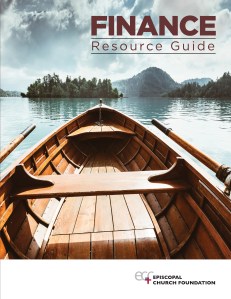
Finance Resource Guide
Guía de recursos para Finanzas
Developed by Episcopal Church Foundation, the Finance Resource Guide offers a basic, practical, and theologically grounded resource for lay and clergy leaders to navigate the complex but essential tasks of raising, stewarding, and expending financial resources for local mission and ministry. This book is designed for lay and clergy leaders with a wide variety of financial backgrounds and expertise—for newly ordained priests as well as veteran parish treasurers, for those faithful parishioners who have ongoing fiduciary responsibilities as well as newcomers who are helping to manage the financial resources of their local faith community for the very first time.
Planned Giving
Planned giving encompasses a variety of ways to create a gift to your church using accumulated resources. This pamphlet from the Episcopal Church Foundation introduces popular options for planned giving including a bequest in a will, life income gifts, gifts of real estate, appreciated property and tangible personal property, and gifts of life insurance and retirement accounts.

Transforming Stewardship
For most Episcopalians, stewardship is synonymous with pledge drives, budgets, and capital campaigns, but the Bible is clear that God wants more than our tithes and offerings. Looking to its scriptural roots in 1 Chronicles, Luke-Acts, and the letters of Paul, as well as St. Francis’ “third way,” Robertson offers a vision of holistic stewardship for the whole church, holistic because it can’t be separated from evangelism, outreach, scripture study, and ministry to the newcomer. It does not involve strong-arm tactics, only a willingness to risk changing existing structures and ideas in order to enrich the faith community and strengthen connections to the neighboring world.
Transforming Stewardship delivers both good and bad news about Episcopalians and stewardship. Robertson provides essential models and spiritual practices in order to transform the church’s outmoded attitudes toward stewardship and wealth into a broader context of faith.

Making Money Holy
A challenge to live out our faith through the way we spend and share our financial resources.
Money has edged out sex as the forbidden topic of conversation in both secular and religious circles. Why do we think of money as shameful, whether we have lots or none at all? How can we in the church engage the topic of money in ways that are liberating and life-giving? How might we choose to deal with money in a way that is grounded in love? How do we understand money as holy? How do we recognize “enough?” Demi Prentiss shares why she believes, “we can come to understand the highest use of money as a tool for sharing God’s grace and for shaping the manifestations of God’s reign here on earth.” This book is a guide to looking at money honestly and practicing conscientious stewardship.
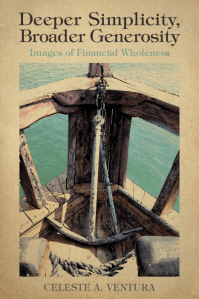
Deeper Simplicity, Broader Generosity
Deeper Simplicity, Broader Generosity uses images found in agriculture, architecture, and creation—including a trellis, a jackpine, an artichoke, a ballet barre, a stork nest—to engage the reader in exploration of how and why we earn, spend, invest, and share our money. Reflections on these images help to build financial knowledge and engagement that can be transformational for ourselves, our communities, and the world.
Celeste Ventura served for twenty-two years as a financial advisor with Merrill Lynch. Since 2002, she has had the privilege of serving as one among many on CREDO faculty in the area of financial wellness. With her involvement in both the Episcopal Church and the world of personal finance over the decades, she has found the most effective entree to financial concepts stems from visual images. “It has been a time of joy and challenge, deep collegiality, passion and insight. Images have always feed my soul and this opportunity to share some reflections with a broader community is pure gift.” She lives in Carmel Valley, California.

Faithful Giving
Planned gifts are typically the largest gifts received by a charity and can transform religious organizations and congregations to become more sustainable, impactful, and vibrant entities for decades to come. Encouraging planned gifts to congregations and religious organizations is essential at this time of tremendous generational wealth transfer; these gifts also provide an opportunity to enhance relationships between supporters and organizations. Many congregations and religious entities fear that they cannot raise these transformational gifts due to a lack of expertise among staff or volunteers, the limited financial resources of their constituents, or the simple discomfort of addressing ultimate issues with donors. Faithful Giving can help change those dynamics.
The book is intentionally inclusive of Christian and other faith traditions by offering several case studies from a variety of Christian denominations and other religions, including Roman Catholic, Episcopal, Presbyterian, Lutheran, Baptist, Jewish, Muslim, Hindu, Sikh, and others.
Transforming Congregations
How can our patterns of congregational life and mission renew themselves and adjust to changing culture without selling out what Episcopalians stand for? How can local faith communities stay resilient and hopeful? What styles and practices of spirituality do most to enrich our mission?
These are some of the questions James Lemler poses in this book on mission for clergy and congregational discussion. As with evangelism, there is both good and bad news about Episcopalians and mission. Lemler also provides a variety of models for moving forward in mission and hope, to a more abundant future.
 Formation